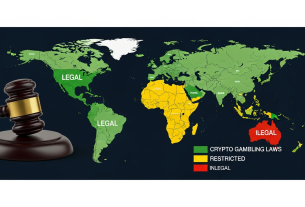

Few industries have been reshaped by technology as thoroughly as gambling. What was once a geographically fixed activity—confined to casinos, racetracks, and licensed betting shops—now unfolds on smartphones, in browsers, and across blockchain networks. As the medium evolved, so did the law. Legislators who once drafted rules around physical premises now grapple with geolocation, digital payments, artificial intelligence, and decentralized finance. The result is a regulatory landscape in constant motion, where every technological leap forces a corresponding legal adjustment.
This article examines how gambling legislation has adapted to technological change, the tensions those adaptations have created, and where regulation is likely headed next.
The Shift From Physical to Digital Jurisdictions
Traditional gambling law rested on a simple premise: if the activity happens inside a jurisdiction, that jurisdiction controls it. Land-based casinos, lotteries, and sportsbooks were licensed, taxed, and policed at the local or national level because their operations were physically bounded.
The internet dismantled that premise. When an operator can serve customers in dozens of countries from a single server, the question of where a bet takes place becomes genuinely difficult. Legislatures responded with a patchwork of approaches:
- Prohibition and blocking: Some jurisdictions banned online gambling outright and required internet service providers to block offshore sites.
- Licensing regimes: Others created formal licensing systems, permitting operators to serve residents provided they met local standards.
- State-by-state legalization: In federal systems such as the United States, individual states legalized online sports betting and casino games independently, producing a fragmented national market.
- Regional harmonization: The European Union and other blocs sought common frameworks to prevent regulatory arbitrage.
Each model reflects a different answer to the same technological problem: how to assert sovereign control over an activity that ignores borders.
Geolocation and the Enforcement of Territorial Rules
If the law says gambling is legal in one state but not its neighbor, enforcement depends on knowing precisely where a player sits. Technology provided the answer—and then became a legal requirement itself.
Modern online gambling platforms deploy geolocation and geofencing tools that verify a user’s physical location before allowing play. Regulators in licensed markets typically mandate these systems, along with identity verification and age checks. In practice, this means:
This is a striking reversal of the usual relationship between law and technology. Instead of law simply restricting technology, the law now requires specific technical capabilities as a condition of doing business.
Data Protection, Responsible Gambling, and Algorithmic Oversight
Digital platforms collect extraordinary amounts of behavioral data. Legislators have recognized both the risk and the opportunity in that data.
On one hand, privacy statutes such as the General Data Protection Regulation in Europe impose strict limits on how personal data may be collected, stored, and used. Gambling operators must reconcile marketing ambitions with consent requirements and data minimization principles.
On the other hand, regulators increasingly require operators to use data to protect consumers. Responsible gambling mandates may include:
- Real-time monitoring of play patterns to detect harmful behavior.
- Mandatory deposit limits, session timers, and self-exclusion registries.
- Algorithmic flagging of at-risk customers, followed by intervention.
- Transparency obligations regarding how automated systems make decisions.
The rise of artificial intelligence complicates this further. When an algorithm determines whether a customer is flagged, offered a bonus, or barred from play, questions of accountability, bias, and explainability move from academic debate into licensing conditions.
Payments, Cryptocurrency, and Anti-Money Laundering
Money is the circulatory system of gambling, and technology has transformed how it moves. Digital wallets, instant bank transfers, and cryptocurrencies have compressed settlement times from days to seconds—and created new vulnerabilities.
Legislators have responded by tightening anti-money laundering (AML) and know-your-customer (KYC) requirements. The table below summarizes how payment innovation has driven regulatory change.
| Credit and debit cards | Restrictions on card use for gambling; transaction monitoring |
| Digital wallets | Licensing of payment intermediaries; source-of-funds checks |
| Cryptocurrencies | Travel rule compliance; bans or strict limits in some markets |
| Open banking | Affordability checks and real-time reporting obligations |
Cryptocurrency remains the most contested frontier. Some jurisdictions treat it as a legitimate payment method subject to AML rules; others prohibit it entirely for gambling. Blockchain analytics firms now sell compliance tools to operators and regulators alike, turning the technology of anonymity into an instrument of surveillance.
Advertising, Affiliates, and the Battle for Attention
Technology changed not only how people gamble but how they are persuaded to. Social media, influencer marketing, and affiliate networks allow operators to reach audiences with a precision that traditional advertising never achieved.
Legislators have moved to constrain this reach. Common measures include:
- Bans on gambling advertising during live sports broadcasts.
- Restrictions on affiliate marketing and revenue-sharing models.
- Prohibitions on targeting minors or using youth-oriented platforms.
- Mandatory responsible gambling messaging alongside promotional content.
Enforcement, however, is difficult when campaigns cross borders and platforms are global. Regulation here often lags behind the marketing techniques it seeks to control.
The Future of Technology-Driven Gambling Law
Looking ahead, several trends will shape legislative priorities.
Interoperability of regulation. As operators serve multiple jurisdictions, calls for shared standards and mutual recognition will grow. Fragmentation is costly and difficult to enforce.
Embedded compliance. Regulators increasingly favor “compliance by design,” requiring platforms to build safeguards into their architecture rather than bolt them on afterward.
Adaptive rulemaking. Fixed statutes struggle to keep pace with innovation. Some jurisdictions now use regulatory sandboxes and periodic licensing reviews to update rules more fluidly.
Global coordination on AML. Financial crime does not respect borders, and neither should the standards designed to stop it.
The through-line is clear: technology no longer merely challenges gambling law—it defines its agenda. Legislators who once regulated buildings and licenses now regulate data flows, algorithms, and digital identities. The jurisdictions that succeed will be those that treat technological change not as an exception to be managed, but as the central subject of regulation itself.