
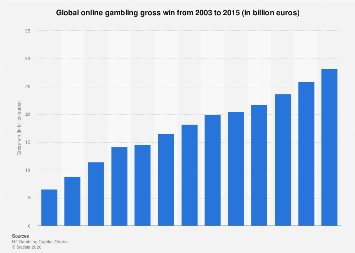
The global gambling industry has never been static. From the dice cups of ancient Mesopotamia to the smartphone in your pocket, wagering has always adapted to the technology, regulation, and culture of its time. What sets the current era apart is the sheer velocity of change. Digital infrastructure, shifting legislation, and evolving consumer expectations are reshaping an industry that, by most estimates, generates well over half a trillion dollars in annual revenue worldwide. Understanding how this sector is evolving is no longer just a curiosity for observers—it is essential context for investors, technologists, regulators, and operators alike.
The Digital Migration Is Now the Default
For two decades, the story of online gambling was one of migration: players moving from physical casinos and betting shops to websites and apps. That migration is largely complete in mature markets. The more interesting development is that digital is no longer a channel—it is the operating system of the entire industry.
Modern platforms integrate payment processing, identity verification, responsible gaming tools, live dealer streaming, and real-time odds engines into a single stack. Operators that once treated their online product as a supplement to bricks-and-mortar venues now treat physical locations as brand experiences and marketing assets. The economics tell the story clearly:
| Pre-2000 | Land-based casinos and shops | Mechanical systems, cash | Atmosphere and immediacy |
| 2000–2015 | Desktop web | Early RNG software, cards | Convenience and variety |
| 2015–2025 | Mobile apps and live streaming | Cloud, HD video, e-wallets | Seamlessness and speed |
| 2025 onward | Hybrid omnichannel ecosystems | AI, biometrics, blockchain | Personalization and trust |
Regulation Is Fragmenting—and Consolidating
One of the most consequential shifts is regulatory. A generation ago, gambling law was relatively binary: jurisdictions either permitted it broadly or prohibited it almost entirely. Today, the map is a patchwork of licensed regimes, each with its own tax structure, advertising rules, and technical standards.
This fragmentation creates real operational complexity. A single European operator may need to comply with dozens of distinct licensing frameworks, each demanding different reporting formats and player protection measures. At the same time, regulators are converging on shared principles:
- Know Your Customer (KYC) requirements that mandate identity verification before deposits or withdrawals.
- Anti-money laundering (AML) protocols with real-time transaction monitoring.
- Responsible gambling mandates, including deposit limits, self-exclusion registries, and behavioral analytics.
- Advertising restrictions that increasingly target affiliate marketing and influencer promotion.
- Data localization rules requiring player data to remain within national borders.
The net effect is that compliance has become a competitive moat. Smaller operators struggle to absorb the cost of multi-jurisdictional licensing, while larger groups invest in dedicated regulatory technology teams. Consolidation is the predictable result.
Artificial Intelligence and the Personalization Paradox
Artificial intelligence is reshaping both the player experience and the back office. Recommendation engines now tailor game lobbies to individual preferences in real time. Chatbots handle routine support queries in dozens of languages. Fraud detection systems flag suspicious patterns within milliseconds.
Yet AI introduces a paradox. The same algorithms that personalize promotions can also identify problem gambling behavior earlier than any human analyst. Regulators are increasingly demanding that operators use AI for protection as well as profit. The industry’s long-term legitimacy may depend on resolving this tension credibly.
Key AI Applications in Gambling
Blockchain, Cryptocurrency, and the Trust Question
Blockchain technology has been proposed as a solution to one of gambling’s oldest problems: trust. Provably fair systems allow players to verify that game outcomes were not manipulated. Smart contracts can automate payouts without intermediaries. Cryptocurrency deposits offer speed and, in some cases, anonymity.
However, the regulatory reception has been mixed. Some jurisdictions have embraced crypto gambling with dedicated licensing frameworks, while others have restricted it entirely. The technology is promising, but it is not a shortcut around compliance. In practice, the most successful implementations combine blockchain transparency with traditional KYC and AML controls.
The Rise of Esports and Skill-Based Wagering
The lines between gambling, gaming, and entertainment are blurring. Esports betting has grown from a niche curiosity into a mainstream vertical, particularly among younger demographics. Skill-based contests, fantasy sports, and social casino products occupy a gray zone that regulators are still learning to classify.
This convergence matters because it changes who the customer is. Traditional casino players skew older. Esports bettors and fantasy players skew younger, mobile-first, and socially engaged. Operators that cannot speak to this audience risk losing the next generation of customers to platforms that can.
What Comes Next
The global gambling industry is evolving along several simultaneous axes: from physical to digital, from fragmented to consolidated, from reactive to predictive, and from opaque to transparent. The operators that thrive will be those that treat technology, compliance, and player protection as interconnected disciplines rather than competing priorities.
For technologists, the opportunity is substantial. Payments, identity, data infrastructure, and AI ethics are all active frontiers. For regulators, the challenge is to protect consumers without stifling innovation. For the industry itself, the mandate is clear: earn trust or lose it. In a market this large and this visible, there is no third option.