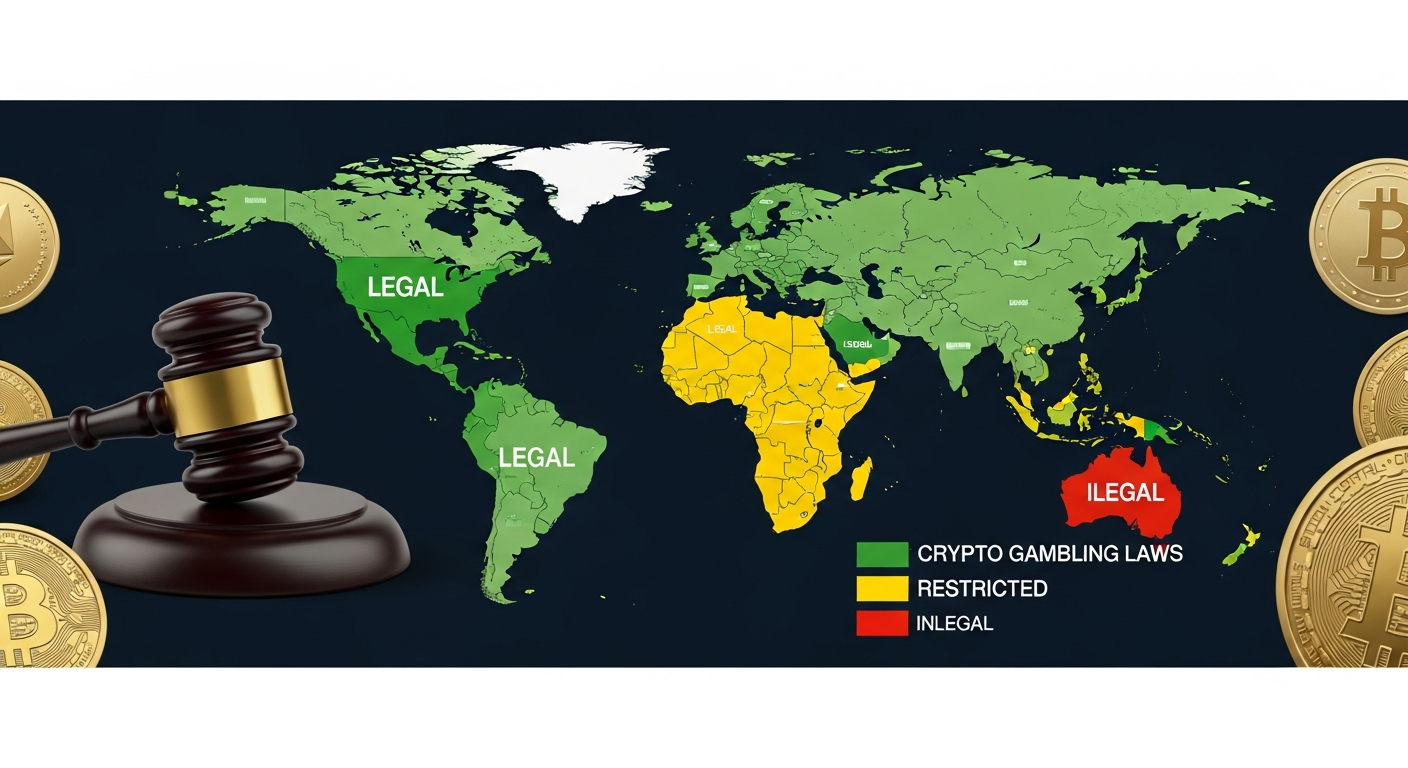
Gambling regulation is one of the most fragmented areas of law in the modern world. A practice that is fully legal and licensed in one jurisdiction can carry criminal penalties just a few hundred kilometers away. For operators, platform developers, and compliance teams, this divergence is not a minor inconvenience — it is a foundational constraint that shapes architecture, payment processing, marketing, and market entry strategy. Understanding why these differences exist requires examining the intersection of history, culture, religion, economics, and technology.
The Historical Roots of Divergent Regulation
Gambling predates written law. Dice and wagering appear in ancient Mesopotamian, Chinese, and Roman records. What changed over centuries was not the human impulse to gamble but the state’s relationship to it.
In much of Europe, gambling evolved from aristocratic pastime to state-sanctioned revenue source. Lotteries were used to fund infrastructure, universities, and wars. This established a precedent: the state as operator or primary beneficiary. In contrast, the United States developed a more moralistic and fragmented framework, where prohibition movements in the 19th and early 20th centuries pushed gambling underground, only for individual states to legalize it selectively in the decades that followed.
The result is a patchwork. Nevada legalized casino gambling in 1931. New Jersey followed in 1976. Many states waited until the 1990s or later. Each decision reflected local political calculus rather than any unified national doctrine.
Religion, Culture, and Social Tolerance
Cultural and religious values exert a direct influence on legislation. Jurisdictions with strong religious traditions that prohibit gambling — whether Islamic, Protestant evangelical, or otherwise — tend to maintain stricter bans or far more restrictive licensing regimes.
Where gambling is viewed as a moral failing, legislation typically emphasizes prohibition and criminal enforcement. Where it is viewed as entertainment with manageable risk, legislation emphasizes consumer protection, licensing, and responsible gambling frameworks.
- Prohibitionist models: Total or near-total bans, often with criminal penalties.
- Monopoly models: State-controlled operators, limited or no private competition.
- Licensed competitive models: Multiple private operators under regulatory oversight.
- Liberalized models: Broad market access with lighter-touch regulation and taxation.
These categories are not static. Countries migrate between them as public opinion, revenue needs, and international norms shift.
Economic Incentives and Tax Policy
Money is a powerful driver of regulatory divergence. Gambling is a highly taxable activity, and governments have strong incentives to either capture that revenue directly or prevent it from flowing abroad.
| State monopoly | Direct revenue capture | Limited choice, predictable tax income |
| Licensed private market | Tax revenue plus job creation | Competitive market, higher compliance costs |
| Prohibition | Reduce social costs | Black market growth, lost tax revenue |
| Offshore tolerance | Attract foreign players | Licensing fees, reputational risk |
Smaller jurisdictions — Malta, Gibraltar, Curaçao, the Isle of Man — have built entire industries around licensing offshore operators. Their laws differ from larger markets not because of culture but because of strategic economic positioning.
Federalism and Multi-Tiered Legal Systems
Not all countries regulate gambling at a single level. Federal systems create additional complexity.
In the United States, gambling is primarily a state matter, but federal law governs interstate commerce, tribal gaming, and online transactions. This creates overlapping and sometimes contradictory rules. A platform that is legal under state law may still violate federal statutes depending on how payments are routed or how servers are configured.
In the European Union, member states retain competence over gambling, but EU law imposes free movement and competition principles. This tension has produced years of litigation and inconsistent enforcement.
Technology, Online Gambling, and Regulatory Lag
The internet broke the geographic assumptions on which gambling law was built. Traditional regulation assumed that operator and player were in the same place. Online gambling dissolved that assumption.
Governments responded in different ways:
- Blocking and enforcement: ISP blocking, payment processor restrictions, criminal liability for unlicensed operators.
- Licensing and regulation: Extending existing frameworks to online activity.
- State monopolies online: Restricting online play to state-run platforms.
- Ambiguity: No clear legal position, leaving enforcement inconsistent.
This lag explains much of the divergence. A country with a well-developed land-based framework may have no coherent online policy, while a smaller jurisdiction may leapfrog ahead by designing regulation for the digital market from the start.
Consumer Protection and Responsible Gambling Standards
Modern regulation increasingly focuses on harm reduction. Jurisdictions differ on how far to go.
| Advertising restrictions | Broad bans, especially near minors | Limited or self-regulated |
| Deposit limits | Mandatory, low thresholds | Optional or voluntary |
| Self-exclusion registries | National, enforced | Operator-level only |
| KYC requirements | Strict, pre-play verification | Post-withdrawal or minimal |
These differences reflect underlying philosophies. Some states treat gamblers as consumers entitled to protection. Others treat them as adults responsible for their own choices. Still others treat them as potential sources of revenue who should not be overly inconvenienced.
International Pressure and Harmonization Efforts
There is no global gambling regulator. Attempts at harmonization have been limited and slow.
The Financial Action Task Force (FATF) sets anti-money-laundering standards that indirectly affect gambling operators. The World Trade Organization has addressed gambling in trade disputes. Bilateral agreements occasionally touch on cross-border wagering. But no binding international framework governs licensing, taxation, or consumer protection.
This absence of coordination is itself a cause of divergence. Without shared standards, each jurisdiction optimizes for its own priorities.
Why This Matters for Technology and Compliance Teams
For anyone building or operating in this space, the practical implications are severe:
Conclusion
Gambling laws differ between countries because they are shaped by forces that have nothing to do with gambling itself: history, religion, economics, constitutional structure, and the pace of technological change. There is no universal logic, only local logic. For operators and technologists, success depends less on finding the perfect jurisdiction and more on building systems flexible enough to operate compliantly across many.